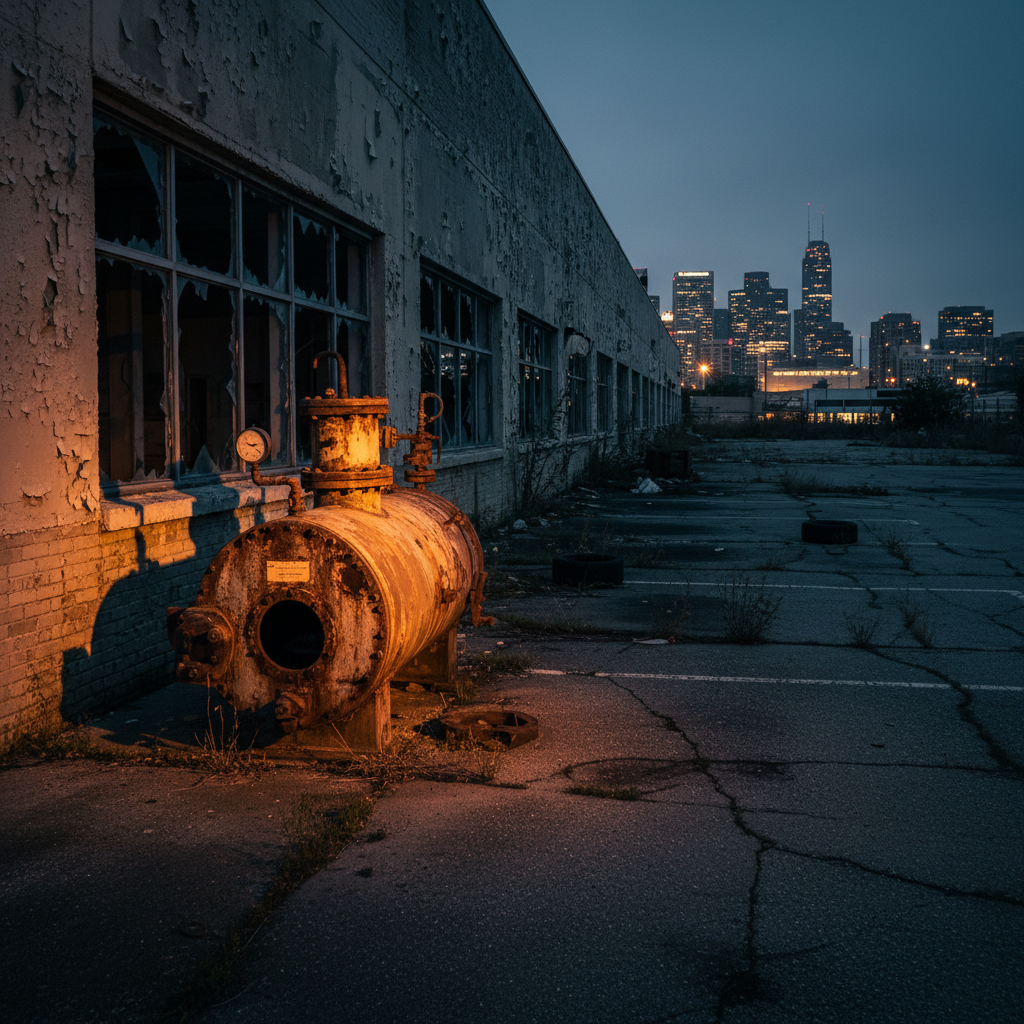
Physical Due Diligence: What a Property Inspection Really Reveals
FAM Capital | Investor Education Series
You can analyze a pro forma down to the penny. You can study the market data until you have every demographic trend memorized. You can vet the sponsor thoroughly and review every legal document in the offering. But until someone physically walks the property, opens the doors, inspects the systems, and looks at what’s actually there, you’re evaluating a deal based on paper and assumptions.
The physical inspection is the reality check. It tells you what the property actually needs, not what the seller says it needs. It reveals the costs that aren’t in the pro forma. It protects you from buying someone else’s deferred maintenance problem. And it gives you the ground truth about whether the renovation budget in the business plan is realistic or whether the sponsor underestimated what the job is actually going to take.
You really can’t get an accurate idea of a property’s quality until you physically walk it. Photos can be staged. Descriptions can be optimistic. Numbers on a spreadsheet don’t tell you that the boiler sounds like it’s on its last legs or that the parking lot has cracks wide enough to catch a tire. The inspection is where the deal meets reality.
This article is written primarily for passive investors who need to know how to evaluate an inspection report and what questions to ask, but it covers enough of the fundamentals that active investors walking their own properties will benefit as well. Whether you’re the one opening the mechanical room door or reading about what someone else found behind it, the framework is the same.
What a Property Inspection Covers
A professional property inspection on a commercial or multifamily building evaluates the physical condition of the entire asset. This is not the same as a standard home inspection. Commercial inspections are more comprehensive, more detailed, and more expensive because the properties are larger and more complex.
The inspection typically covers the:
- Structural components (foundation, framing, load-bearing walls)
- Building envelope (roof, siding, windows, exterior walls)
- Mechanical systems (HVAC, plumbing, electrical)
- Interior condition of units and common areas
- Site conditions (parking lot, landscaping, drainage, fencing)
- Life-safety systems (fire alarms, sprinklers, emergency lighting, egress)
The output is an inspection report that documents the condition of each component, identifies deficiencies, estimates remaining useful life for major systems, and provides cost estimates for repairs or replacements. This report is one of the most important documents you’ll review during due diligence because it translates the physical condition of the property into dollar amounts that directly affect your investment.
Structure and Foundation: The Deal Killers
Structural issues are the first thing to evaluate because they’re the most expensive to fix and the hardest to work around. Foundation problems, load-bearing wall damage, significant settling, and major structural cracks are not routine maintenance items. They are fundamental problems that can cost hundreds of thousands of dollars to remediate and that can affect every other system in the building.
A cracked foundation can cause doors and windows to stick, floors to slope, walls to crack, and plumbing to shift and break. What looks like a cosmetic wall crack might be a symptom of a structural issue that runs much deeper. This is why structural evaluation needs to come first. If the structure is compromised, everything built on top of it is compromised.
For passive investors reviewing an inspection report, look for any mentions of foundation movement, significant settling, structural cracks (as opposed to cosmetic cracks), water intrusion at the foundation level, or recommendations for further structural engineering evaluation.
If the inspector recommends bringing in a structural engineer for a more detailed assessment, that’s a signal that what they found warrants closer attention.
Structural problems are the one category where walking away from the deal is a legitimate response. Everything else can be negotiated, budgeted for, or managed. Structural issues can be so expensive and so unpredictable in scope that they fundamentally change the economics of the deal. If the inspection reveals serious structural concerns, proceed with extreme caution or walk away entirely.
Major Systems: Roof, HVAC, Plumbing, and Electrical
After the structure, the major building systems are the next priority. These are the components that cost real money to repair or replace, and their condition directly affects your capital expenditure budget for the hold period.
Roof
The roof is typically the single most expensive system to replace on a commercial or multifamily property. A full roof replacement on a larger building can cost $100,000 to $500,000 or more depending on the size, material, and complexity. The inspection should tell you the roof’s approximate age, its current condition, any areas of damage or deterioration, and its estimated remaining useful life.
If the roof has 15 years of life remaining and your hold period is five years, roof replacement is probably not your problem. If it has three to five years remaining and your hold period is seven years, that replacement cost needs to be in your budget. A roof that’s already leaking or past its useful life needs to be addressed immediately, and that cost should be factored into the purchase price or the renovation budget.
HVAC
Heating, ventilation, and air conditioning systems have finite lifespans. Residential HVAC units typically last 15 to 20 years. Commercial systems can last longer with proper maintenance, but they eventually fail. The inspection should identify the age, condition, and maintenance history of all HVAC equipment.
For multifamily properties, the question is whether units have individual systems or a central system. Individual units with their own furnaces and AC units mean replacement costs are spread over time as individual units fail. A central boiler or chiller system means one large expense when the system needs to be replaced. Know which type the property has and what the expected replacement timeline looks like.
Plumbing
Plumbing issues range from minor (a leaky faucet) to catastrophic (main sewer line failure or galvanized pipe replacement throughout the building). The inspection should evaluate the type and condition of the supply lines, drain lines, water heaters, and fixtures.
Older buildings with galvanized steel or cast iron plumbing are particularly important to evaluate. These materials corrode over time, reducing water flow and eventually failing. Replacing the plumbing in an occupied building is expensive, disruptive, and time-consuming. If the property has original plumbing from the 1960s or 1970s, expect that some or all of it will need to be addressed during your hold period.
Electrical
The electrical system needs to be safe, up to code, and adequate for the property’s needs. The inspection should evaluate the main electrical panel, the wiring type and condition, the adequacy of the service for the building’s size, and any code violations or safety concerns.
Older buildings sometimes have outdated wiring (aluminum wiring, knob and tube, or undersized panels) that presents both safety risks and code compliance issues. Bringing an older electrical system up to current standards can be a significant expense, and it’s one that often gets underestimated in renovation budgets because the wiring is hidden behind walls.
The Small Issues That Aren’t Small
One of the most commonly overlooked findings in a property inspection isn’t a major system failure. It’s the collection of small issues that seem minor on the surface but turn into expensive problems once you start dealing with them.
- A small water stain on a ceiling could be a one-time leak from an upstairs bathroom. Or it could be evidence of an ongoing plumbing issue inside the wall that requires opening the wall, replacing the pipe, repairing the drywall, and repainting. What looked like a $200 cosmetic fix turns into a $2,000 repair.
- A minor crack in a window frame could mean just the frame needs caulking. Or it could mean the window is no longer sealed properly, which means moisture is getting into the wall cavity, which means potential mold, which means remediation. What looked like a $50 fix turns into a $5,000 problem.
These small issues add up quickly. A 20-unit building might have dozens of minor items that individually seem insignificant but collectively represent $30,000 to $50,000 or more in actual repair costs. When budgeting for renovations and capital expenditures, these small items need to be accounted for appropriately. Every experienced property owner knows that once you start opening things up, you find more work than you expected. That’s not bad luck. That’s reality. Budget for it.
The inspection report will list these items. Don’t dismiss them because they don’t have large individual price tags. Add them up. Factor in the reality that some of them will be worse than they appear once work begins. And make sure the renovation budget includes contingency for the discoveries that always happen during construction.
The Inspection as a Reality Check on the Business Plan
For value-add deals, the physical inspection is the moment when you find out whether the renovation budget is realistic or whether the sponsor underestimated the scope of work.
The pro forma says $10,000 per unit for renovations. The inspection reveals that the plumbing in half the units needs to be replaced. The electrical panels are undersized and need upgrading. The windows are single-pane and drafty. The common area flooring is deteriorated. Suddenly, $10,000 per unit isn’t going to cover the actual work required.
This is the inspection’s most important function on a value-add deal. It’s the reality check on the entire business plan. It tells you how much work there is actually going to be, what systems are going to require overhaul, and how much money it’s actually going to take. If the inspection supports the renovation budget, you have validation. If it reveals significantly more work than the budget accounts for, the deal’s economics need to be revisited.
For passive investors, this means asking the sponsor specific questions about the inspection findings. How do the inspection results compare to the renovation budget in the pro forma? Were there any surprises? Has the budget been adjusted to account for what was found? Is there a contingency built in for additional discoveries during construction? The answers tell you whether the sponsor has a realistic plan or a hopeful one.
What Passive Investors Should Look for in an Inspection Report
As a passive investor, you probably won’t walk the property yourself. But you should have access to the inspection report, and you should know what to look for when you read it.
Start with the executive summary. Most inspection reports begin with a high-level overview of the property’s condition and the most significant findings. This gives you a quick picture of whether the property is in generally good condition with minor issues or whether there are major concerns that need attention.
Look for any items flagged as immediate safety concerns or code violations. These are issues that need to be addressed right away, either before closing or immediately after. They often carry mandatory timelines and can involve significant cost.
Look for the remaining useful life estimates on major systems. The roof has five years left. The boilers have eight years left. The parking lot needs resurfacing in three years. These timelines tell you what capital expenditures are coming during the hold period and whether the deal’s CapEx budget accounts for them.
Look at the total estimated cost of repairs and replacements. Add up the items the inspector identified and compare that total to the renovation and CapEx budget in the pro forma. If the inspection identifies $200,000 in needed work and the pro forma budgets $150,000, there’s a $50,000 gap that needs to be addressed.
Finally, look for recommendations for further evaluation. If the inspector recommends additional testing for environmental concerns, structural engineering review, or specialist evaluation of specific systems, those recommendations should be followed before closing. They exist because the inspector found something concerning enough to warrant deeper analysis.
Using Inspection Findings to Renegotiate
The inspection doesn’t just inform your investment decision. For active investors, it’s also a powerful negotiation tool.
If the inspection reveals issues that weren’t disclosed by the seller or that the seller minimized, you have leverage to renegotiate the purchase price, request repairs before closing, or increase the seller’s contribution to closing costs. Every dollar of unexpected repair cost that the inspection uncovers is a dollar you can bring to the negotiation table.
There are times when inspection findings are so severe that walking away is the right call. Structural problems that are expensive and unpredictable in scope, environmental contamination that requires remediation, or conditions that make the property unsafe or uninsurable are all legitimate reasons to terminate the deal.
But if the findings are manageable, the ability to renegotiate is always on the table. A roof that needs replacement in two years is not a dealbreaker. It’s a $150,000 cost that the seller knew about and didn’t disclose (or did disclose but didn’t price into the deal). You can use that finding to reduce the purchase price by $150,000, effectively making the seller pay for the roof through a lower acquisition cost. You may end up with an even better deal than you started with because the inspection gave you the evidence to negotiate from a position of strength.
For passive syndication investors, the sponsor handles the negotiation. But understanding how the inspection findings affect the deal’s economics helps you evaluate whether the sponsor used the inspection effectively. Did they renegotiate the price? Did they adjust the renovation budget? Did they increase reserves? The sponsor’s response to the inspection tells you something about how they protect investor capital.
The Bottom Line
The physical inspection is where the deal meets reality. It tells you what the property actually needs, what it’s going to cost, and whether the business plan’s renovation budget is grounded in fact or built on assumptions that haven’t been tested against the physical condition of the asset.
Structure and major systems come first. If the foundation is compromised or the roof, HVAC, plumbing, or electrical systems need immediate replacement, those costs change the economics of the deal. Small issues that seem minor can become expensive once you start opening things up, and they need to be budgeted appropriately with contingency for the unexpected.
For passive investors, review the inspection report carefully. Look at the executive summary, the major findings, the remaining useful life of key systems, the total estimated cost of repairs, and any recommendations for further evaluation. Ask the sponsor how the findings compare to the renovation budget and what adjustments were made. The inspection is the reality check on the entire business plan. Make sure it’s been taken seriously.